You closed the sensor-to-decision gap. Now explain it.
What happens to a manufacturing AI decision when it becomes CMC content, and then becomes an information request?
We put a Merck VP, a Teva innovation lead and our own President of Life Sciences on a stage and asked where AI evidence actually breaks. Here is what they said, what the room admitted, and what to do about it.
What the room said
Three live polls during the session. Small sample, so read it as directional rather than as a market statistic.
Live polls during the session, 11 September 2026. Between 19 and 22 people answered each, out of 135 live attendees. Self-selected sample.
Two things stand out. Nobody chose "we don't keep that." Every person in that room believed the record existed somewhere, and half of them could not produce it. And a third of the people who said nothing was stopping them had assumed the problem was already solved.
Three arguments worth stealing
1. The break is in the documents, not the model.
Engineers look at the model. Auditors look at the record. Neither is usually where the trail breaks. Every boundary between two systems regenerates a document, and the number of boundaries is going up, not down. A contract manufacturer can run a fully electronic batch record internally, every value captured at the sensor, and what arrives at the sponsor is a PDF. Structured at origin, a document on arrival, and the sponsor is the one accountable for citing it two years later.
2. A record you rebuild is not a record.
There is one test, and it is a single question. Can you show the record without running the model again? If reproducing the explanation requires re-invoking the system, that is not a record. It is a new opinion that happens to agree with the old one. ALCOA+ has a C in it, and the C is contemporaneous. It is the letter everyone skips, because it is the only one that is invisible in a demo.
3. Human sign-off is not sufficient on its own.
A human signing the output is where most programs stop. It is not where a regulator stops. If the question arrives two years later, you are still expected to reconstruct how the decision was reached, which means the source provenance and the model version had to be captured at the time. Sign-off proves someone reviewed it. It does not reconstruct the reasoning.
Four questions to ask any vendor who says "explainable"
We are a vendor. Ask us these too.
Where that leaves you
Every argument above points the same direction. The evidence has to exist before the question arrives, and it has to come from documents that were built to be cited. That is either true of your document layer today or it is not, and most organisations do not know which.
Finding out takes a defined piece of work on your own content, not a demo on ours.
FAQ
Why does a document company have an opinion about AI explainability?
Because the explanation has to cite something. Models are improving quickly and are not usually the constraint. The documents underneath them were mostly never built to be cited, and that is the part nobody is fixing.
Is this only relevant to pharma?
No, and that was the point of running it at an industrial event. Pharma is early rather than unusual, because it has had somebody checking its work for sixty years. The same question arrives for everyone else from a customer, an auditor, or legal.
Does Adlib work with SharePoint, FileNet, OpenText, or M-Files?
Yes. Adlib sits on top of the ECM and records systems you already run, including SharePoint, FileNet, OpenText, and M-Files, so you don't replace your system of record to get preservation-grade, audit-ready documents.
How does Adlib handle security and data privacy?
Adlib Software takes security and data privacy very seriously and follows industry best practices to ensure that customer data is protected. This includes encryption of data in transit and at rest, secure data centers, and regular security audits and assessments. Adlib Software is SOC 2 Type 2 and HIPAA certified.
How is Adlib different from basic OCR or document capture tools?
Adlib doesn't just add a text layer; it converts 300+ file types (including CAD and legacy formats) into pixel-perfect, preservation-grade documents of record with tables of contents, bookmarks, hyperlinks, metadata, and audit trails.
What security standards and certifications does Adlib support?
Adlib follows enterprise-grade security practices, including SOC 2, HIPAA, and FIPS-aligned controls, alongside SIEM logging, SAML/LDAP integration, and hardened container deployments.
Our Speakers
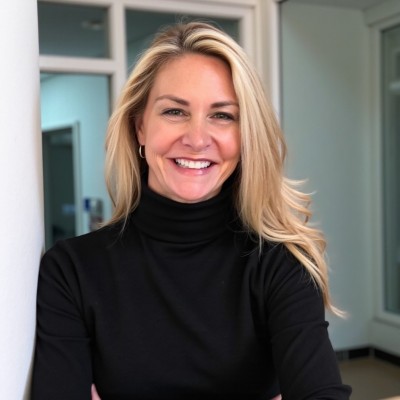
Kristen Sauter
Kristen Sauter leads Adlib's life sciences go-to-market strategy, bringing more than 20 years of regulatory operations, data, and AI expertise from inside the industry. Most recently, she led Deloitte's Regulatory, AI & Data practice for Life Sciences and Health Care. Prior to that, she served as Sr. Director, Global Head of Regulatory Affairs Information Management & Digital Innovation at Takeda, where she built the information management infrastructure supporting global regulatory submissions. Kristen has spent her career at the intersection of regulatory complexity and the technology organizations need to manage it, and joins Adlib to help life sciences leaders build AI they can actually defend.

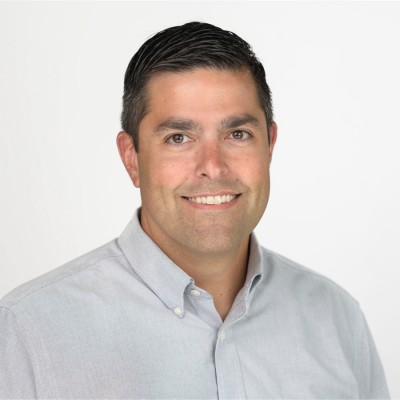
Adam Procopio
Adam Procopio is a biopharmaceutical professional with over 24 years of experience and a strong technical background in CMC clinical and commercial development, including process scale-up and technology transfer, regulatory affairs, quality assurance, and project management. He has successfully led and collaborated on multiple licensing and acquisition deals with global partners, ranging from early-stage research collaborations to late-stage commercialization agreements.

Maya Schushan-Orgad
Maya Schushan Orgad, PhD, is the Open Innovation Platform Leader and Senior Director at Teva Pharmaceuticals, leading Teva Rise, the company’s global open innovation platform. She brings extensive experience in innovation, technology scouting, strategic partnerships, and investment-related activities, with a focus on accelerating the adoption of emerging technologies and advanced solutions across the pharmaceutical industry.